
The grinding head attachment works to remove raised areas of asphalt from a otherwise flat area. The device is meant to no penetrate below the regular surface, and will for the most part just skim along the surface of the tarmac. Due to this design it works differently from what most people traditionally think a removal machine does. Instead of milling like a road mill, which tears the asphalt up in a vertical motion, this head rotates parallel to the ground and actually press down on the asphalt to separate it. The entire process works to converse as much of the material as possible, with no need for on head adjustments for depth or height.
A milling head needs to have depth guides, that must be raised very high to remove material under them, which is fine until the head is off of the bump, then it digs a hole in to the path. if the material is fragile, they are also much more destructive to the area.
The floating on the surface also yields to the ability to remove paint lines on the surface with less disruption. Also if one remove some of the cutting teeth, the unit can irregularly cut into the surface and create what we call a washboard effect to highly increase the traction on said surface. This floating process also works well in smoothing control joints on concrete slabs, sidewalks and paths.
The life of the teeth depends on the hardness of the asphalt and just how much grinding is being done, usually 1-3 days. big units have 12 and small have 8, ~ $5 per.
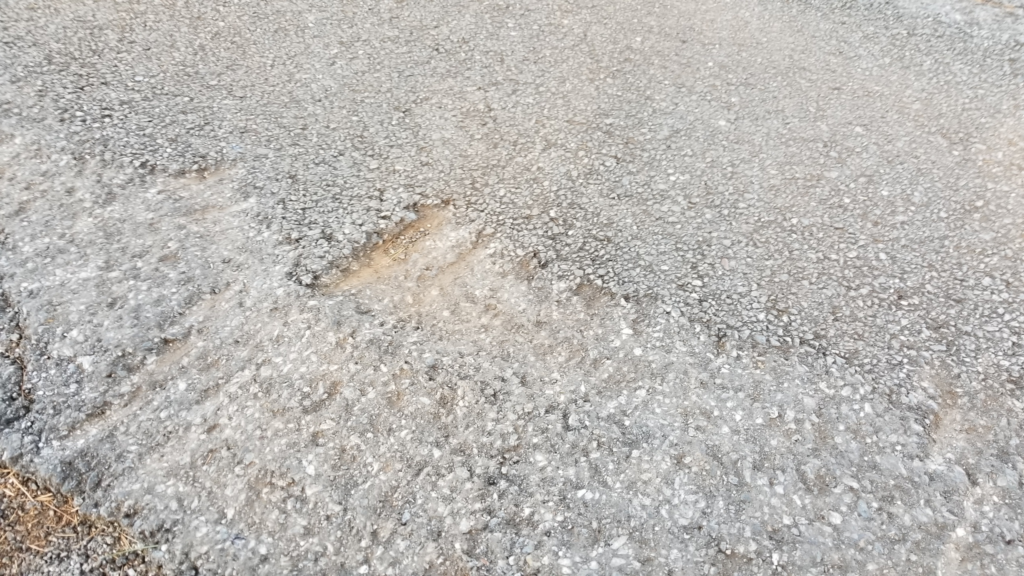
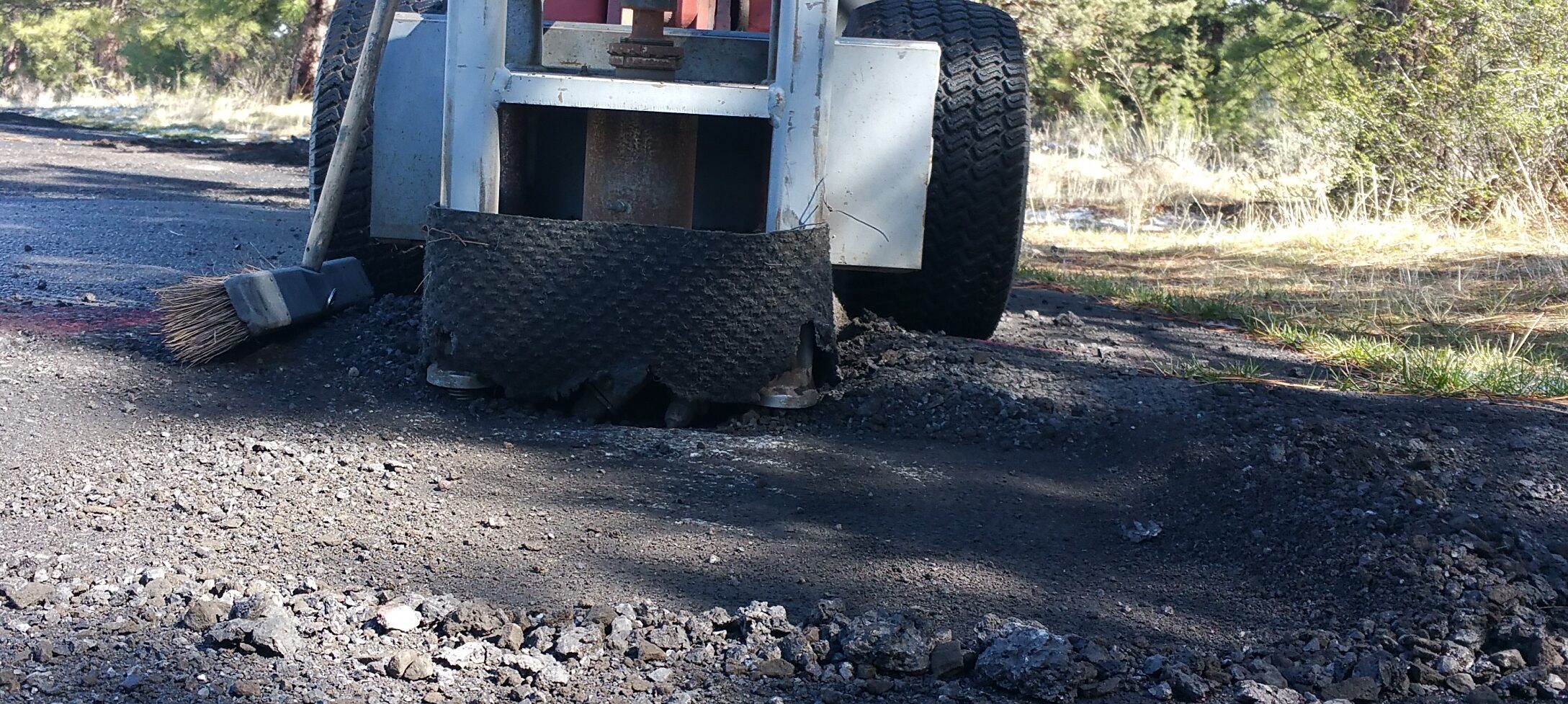
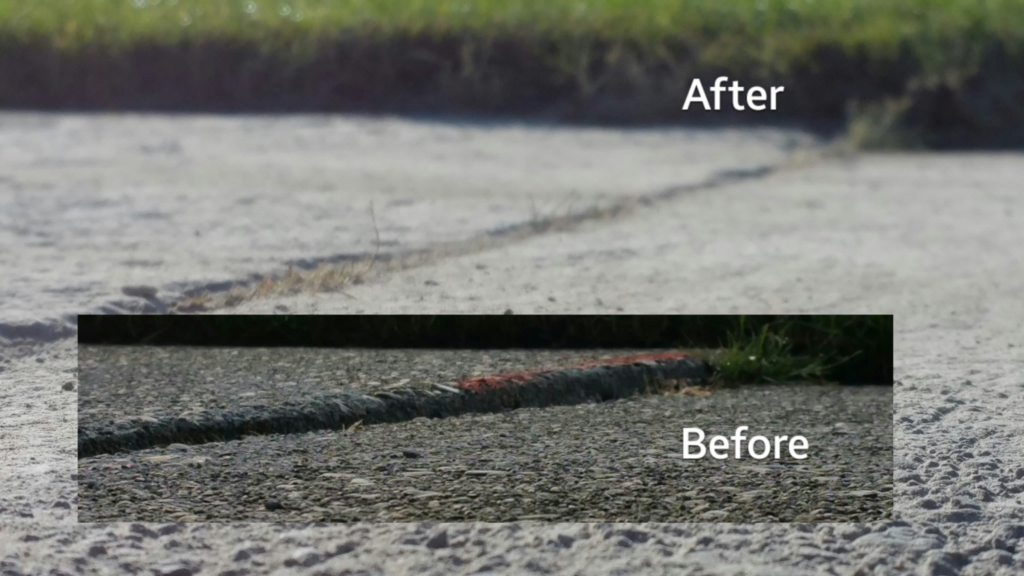
Above we have pictures of damage from a milling head, a difficult to see bump that has been fully reduced on the left side and full on the right, and a concrete example.